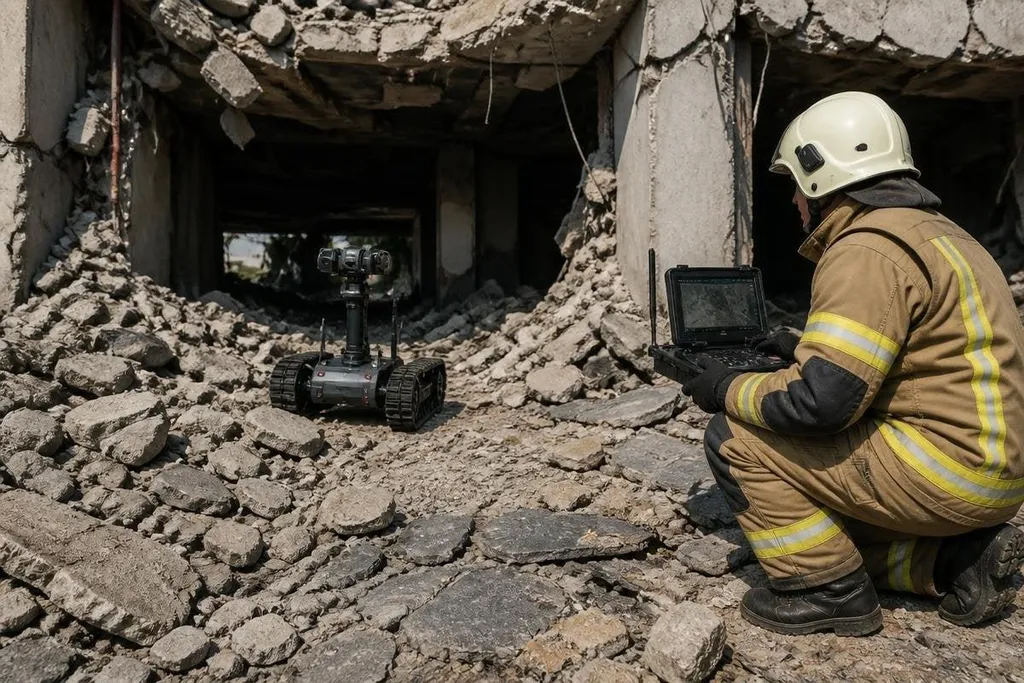
A collapsed building, flooded tunnel, or damaged chemical plant can make the first inspection too risky for a person. Disaster robots let response teams send cameras, sensors, and tools into those spaces before anyone crosses the threshold.
- Remote inspection in unstable areas
- Thermal cameras and LiDAR for missing detail
- Clear limits around batteries, radios, and control
The first job is seeing what changed
After a fire, flood, or structural failure, responders need fresh information. Old plans may show where a room was, but they can’t show which walls moved, where water is rising, or whether smoke still blocks a route.
A tracked ground robot can carry a visible-light camera, a thermal camera, and a microphone. The operator can inspect rooms from a safer position and send the video to other people on the team. Thermal images may show heat through smoke or help locate a person whose body is hard to see.
LiDAR measures distance with laser pulses and builds a map from those measurements. That map can show the shape of a passage when dust, darkness, or broken materials make normal video hard to read. The result is a better route plan, not a guarantee that the route is safe.
Small aerial robots help when debris blocks ground travel. An overhead view can show roof damage, blocked roads, or the spread of a flood. The aircraft still needs room to fly, and smoke, rain, steel, and weak radio signals can cut the operator’s view or control link.
Robots keep people farther from hazards
A robot can carry a gas sensor into a space where air quality is unknown. It can send readings back while responders remain outside. That distance matters around toxic fumes, live electrical equipment, unstable floors, and areas at risk of another collapse.
Underwater robots deal with a different set of problems. A remotely operated vehicle can inspect submerged rooms, bridge supports, or vehicles in deep water while sending video through a cable. The cable brings power or data in some systems, but it can also snag on wreckage and restrict movement.
Those trade-offs need reports that name the robot, test site, date, and operator’s role. Robot24.com robotics coverage can place those details beside what the machine did and where it stopped working. That record matters in a rescue, where a snagged cable or lost video feed can change whether people enter.
I think disaster robots deserve more attention for the dull work of checking, mapping, and carrying sensors. Those tasks may look modest beside a rescue demo, yet good information can change where people walk and when they enter.
The hard limits are physical
Most disaster robots still depend on a person, a battery, and a working link. A remote operator must read the video, control the robot, avoid obstacles, and decide when to turn back. Autonomous systems can help with mapping or route planning, but rubble rarely matches the clean conditions used for training.
Water, dust, heat, and narrow gaps can damage hardware. A robot that works on a dry floor may lose traction in mud. A drone that flies well in an open room may fail near cables, smoke, or moving air. Recovery is another concern: if the robot stops in the worst part of the site, a person may need to retrieve it.
Teams also need practice before an emergency. Operators must know how to drive without a clear view, change batteries, clean sensors, and keep a second control method ready. A robot stored in a case is equipment; a tested robot is part of a response plan.
A practical buying checklist
Use these checks before choosing a system:
- Name the hazard first. Match the robot to fire, flood, collapse, chemical exposure, or another specific task.
- Check the sensor view. Confirm that the camera, thermal sensor, microphone, or gas sensor answers the question responders face.
- Test the radio link. Measure control and video inside concrete, steel, tunnels, and other places the robot must enter.
- Plan recovery. Decide how the team will retrieve a stuck robot without sending someone into the hazard.
- Train the operators. Run practice sessions with the same controller, batteries, sensors, and protective equipment.
That list shifts the purchase from a dramatic demonstration to a tool the team can use under pressure. It also shows where a lower-cost ground robot may fit better than a drone or underwater system.
The next useful test is simple: put the robot in a dark, wet, obstructed space and measure what information reaches the operator, how long the battery lasts, and how often the system needs a person to step closer.